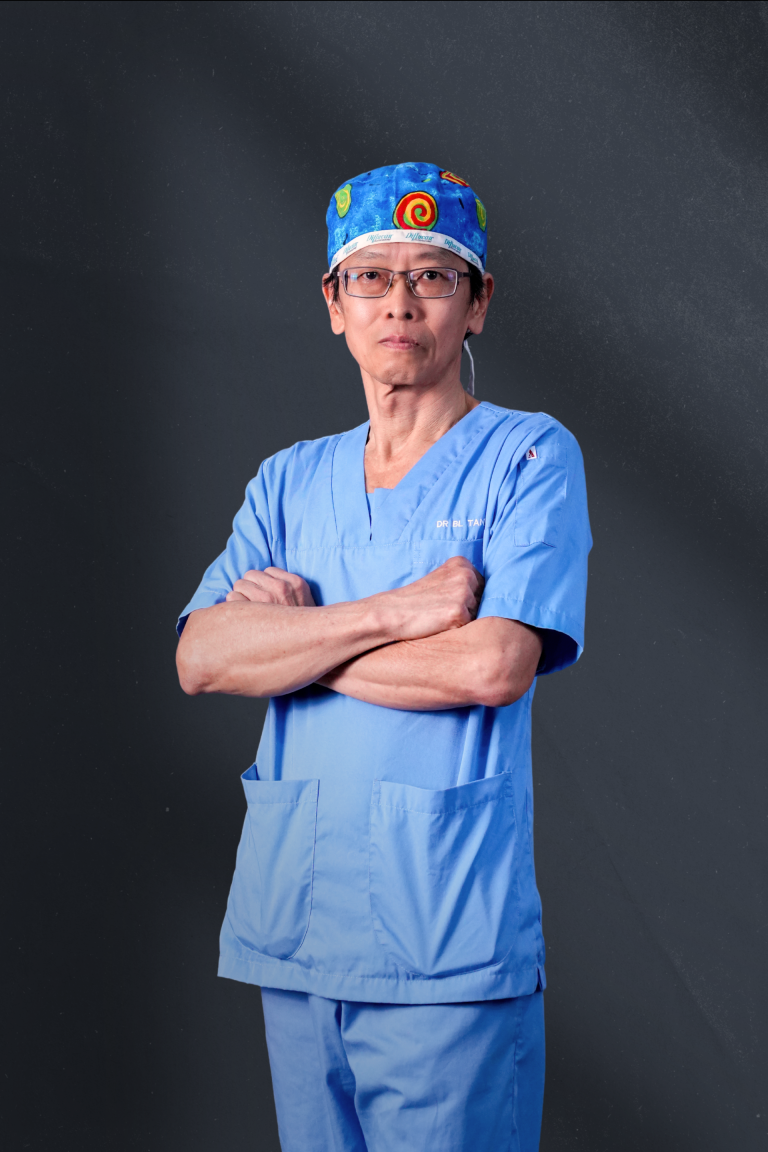
GENERAL SURGERY
Surgery for the abdomen, digestive system, hernias, breast and thyroid — using keyhole techniques where possible, for smaller scars and a faster recovery.
Surgery, planned around you
General Surgery covers a broad range of conditions that need an operation — problems of the digestive tract, liver, gallbladder, appendix, colon, breast, thyroid, hernias and soft tissues. Some are planned; some are emergencies.
At Putra Medical Centre, we use the full range of techniques, from traditional open surgery to keyhole (laparoscopic) procedures — and we choose the approach based on your condition, its complexity, and getting you recovered as smoothly as possible.
Our surgeons work closely with anaesthesia, oncology, gastroenterology, radiology, intensive care and rehabilitation, so your care is joined up from diagnosis through to recovery.
What we help with
Not sure if you need surgery? Start with what's wrong — we'll assess it and talk you through the options.
Gallstones or gallbladder pain
Pain after eating, especially fatty food.
Sudden severe tummy pain
Possible appendicitis or another acute abdominal problem.
A hernia
A lump or bulge in the groin or tummy, often when you strain.
A breast lump or change
Any new lump or change is worth getting checked early.
A thyroid lump
A swelling in the neck that needs assessment.
Bowel problems
Colorectal conditions, tumours or bowel obstruction.
Emergency & trauma
Acute conditions that need surgery without delay.
Keyhole or robotic surgery
Wondering which technique suits your operation?
What we treat
Some of the most common conditions our surgeons handle. Pick the one that fits your situation.
Removing an inflamed appendix, or a gallbladder that's causing pain from stones or inflammation.
What this includes
- Appendectomy (appendix removal)
- Cholecystectomy (gallbladder removal)
- Usually done as keyhole surgery
Removing an inflamed appendix prevents a dangerous rupture; removing a troublesome gallbladder ends the recurrent pain for good.
Repairing a weakness in the abdominal wall before it causes trouble.
What this includes
- Groin (inguinal) hernia repair
- Abdominal wall hernia repair
- Open or keyhole techniques
Repairing a hernia prevents serious complications like strangulation, where the tissue's blood supply gets cut off.
Assessing and treating breast lumps — both benign conditions and cancer.
What this includes
- Removal of benign breast lumps
- Cancer-related breast surgery
- Working with oncology when needed
Early detection and treatment make a real difference to survival — so a new lump is always worth checking without delay.
Removing thyroid nodules or cancer, safely and precisely.
What this includes
- Removal of thyroid nodules
- Surgery for thyroid cancer
Treats malignancy and prevents a large nodule from pressing on your airway.
Surgery for tumours, diverticular disease and bowel obstruction.
What this includes
- Colorectal tumour surgery
- Diverticular disease
- Bowel obstruction
Restores normal digestive function and, in cancer cases, significantly improves outcomes.
Urgent surgery for trauma, perforation and acute abdominal conditions — any time.
What this includes
- Trauma surgery
- Perforation and acute abdomen
- 24-hour surgical cover
These are life-saving operations — and having the team available around the clock means no waiting when it counts.
Three ways we can operate
The right technique depends on your condition. Here's how they compare — and what each means for your recovery.
Open surgery
For complex cases, large tumours, emergencies, or when wider access is needed.
- Direct access to the affected area
- Highly effective for complicated cases
- Sometimes the safest choice
Keyhole surgery
Laparoscopic — small incisions and a camera. Common for gallbladder, appendix, hernia and colorectal procedures.
- Smaller scars, less pain after
- Shorter hospital stay
- Faster recovery, lower infection risk
Robotic-assisted Coming soon
A robotic platform controlled by the surgeon for highly precise movements through small incisions.
- Greater precision, reduced blood loss
- 3D magnified view for the surgeon
- Faster recovery, fewer complications
Modern surgical care in Northern Malaysia — without the trip to KL or Penang
With high-definition keyhole systems, modern operating theatres, and robotic-assisted surgery on the way, PMC Alor Setar brings advanced surgical care to the north — so more patients can be treated safely near home instead of being referred to distant centres.
Your surgical journey, step by step
From first consultation to going home — here's how it usually works.
Consultation & diagnosis
The surgeon assesses your condition and arranges any scans or tests needed.
Pre-op assessment
Our anaesthesia team checks you're ready and plans the safest anaesthetic.
Your operation
Done by open or keyhole surgery, whichever suits your case best.
Recovery
Structured after-care gets you moving early, for a smoother, quicker recovery.
Follow-up
A review to check your healing and answer any questions.
What you get at PMCK surgery
One team from diagnosis to recovery
Your surgeon works alongside anaesthesia, oncology, gastroenterology, radiology and intensive care — so nothing is handed off and lost, and your whole journey is coordinated.
Thorough pre-op assessment
Careful evaluation before surgery to keep risk as low as possible.
Enhanced recovery (ERAS)
Structured protocols that speed healing and shorten hospital stays.
Advanced equipment
High-definition laparoscopic systems and modern theatres, with robotics coming.
24-hour surgical cover
Ready for emergency surgery whenever it's needed.
Ready to see a surgeon?
Book a surgical consultation at Putra Medical Centre, or call us and we'll help you find a time. If your GP has referred you, bring the referral along.