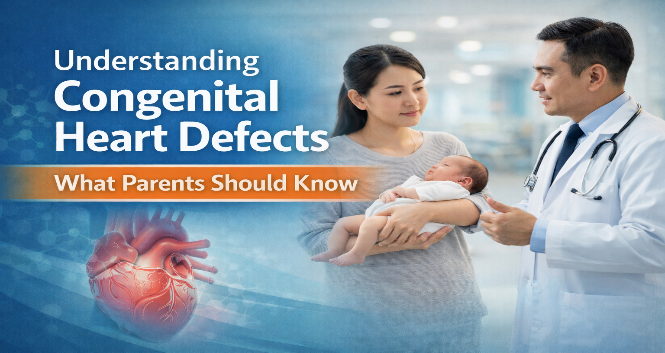
Bringing a child into the world is a moment filled with hope and expectation. For some families, that journey includes learning about congenital heart defects, also known as CHDs. While the term may sound worrying, understanding the basics can help parents feel more informed and prepared.
Congenital heart defects are among the most common conditions present at birth. In Malaysia, they are an important public health consideration, especially for families with newborns and young children.
What Are Congenital Heart Defects?
Congenital heart defects are structural differences in the heart that develop before a baby is born. These may involve the heart walls, valves, or blood vessels connected to the heart. Some defects are mild and may cause few or no noticeable problems early in life. Others can affect how efficiently the heart pumps blood and how oxygen circulates throughout the body. The exact cause is often unknown. Research suggests that a combination of genetic factors and environmental influences during pregnancy may play a role.
Common Types of Congenital Heart Defects
There are many types of congenital heart defects. Some of the more commonly recognised ones include:
- Ventricular Septal Defect (VSD)
A small opening in the wall separating the lower chambers of the heart.
- Atrial Septal Defect (ASD)
An opening between the upper chambers of the heart, which can affect blood flow.
- Tetralogy of Fallot
A combination of four structural differences that can reduce oxygen levels in the blood.
- Pulmonary Stenosis
Narrowing near or at the pulmonary valve, which can restrict blood flow from the heart to the lungs.
Each child’s condition is unique, and the effects can vary widely.
Signs Parents May Notice
Some congenital heart defects are detected before or shortly after birth. Others may only become noticeable later.
Parents or caregivers may observe:
- A bluish colour on the lips, skin, or nails
- Rapid or laboured breathing
- Tiring easily, especially during feeding or activity
- Poor weight gain in infants
- Swelling around the eyes, legs, or abdomen
These signs can also be linked to other conditions. Not every child with these symptoms has a heart defect, but awareness is important.
How Congenital Heart Defects Are Usually Identified
Congenital heart defects are commonly identified through:
- Physical examinations
- Imaging tests such as heart ultrasounds
- Monitoring growth and development over time
Early identification helps healthcare teams understand a child’s needs and plan appropriate follow-up.
Living With a Congenital Heart Defect
Many children with congenital heart defects grow up to lead active and meaningful lives. Ongoing monitoring and supportive care are often part of their journey, especially during childhood. Families may find it helpful to:
- Keep regular health appointments
- Learn about their child’s condition using reliable sources
- Seek emotional and peer support when needed
Understanding the condition can empower parents to participate confidently in their child’s care.
PMC: Supporting Families Through Every Stage
Putra Medical Centre (PMC) recognises that learning about a child’s health condition can feel overwhelming. Through a focus on clear communication, coordinated care, and family-centred support, PMC aims to help parents navigate health concerns with reassurance and understanding.
Key Takeaways for Parents
- Congenital heart defects are conditions present at birth and vary in severity.
- Some children show signs early, while others may not.
- Awareness and regular health monitoring play an important role.
- Reliable information helps parents feel more prepared and less anxious.
Disclaimer: This content is for general educational purposes only and does not replace professional medical advice, diagnosis, or treatment. Always seek advice from a qualified healthcare provider for personal concerns. If you experience urgent symptoms, seek immediate medical attention or call 999.