Skip to content

Sustainability

How our hospitals are designed, powered and maintained, measured against standards we do not set ourselves.

Measured, 2023–2024

What the last two years look like

Every figure below is drawn from our own operational reporting for 2023 and 2024.

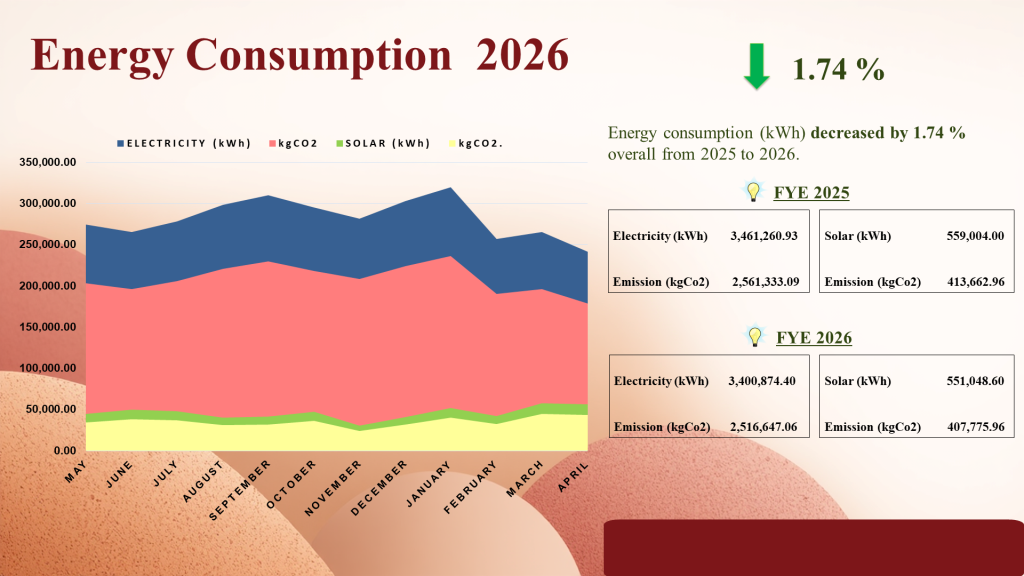
5,600 Homes' worth of energy Generated by our solar assets, per year
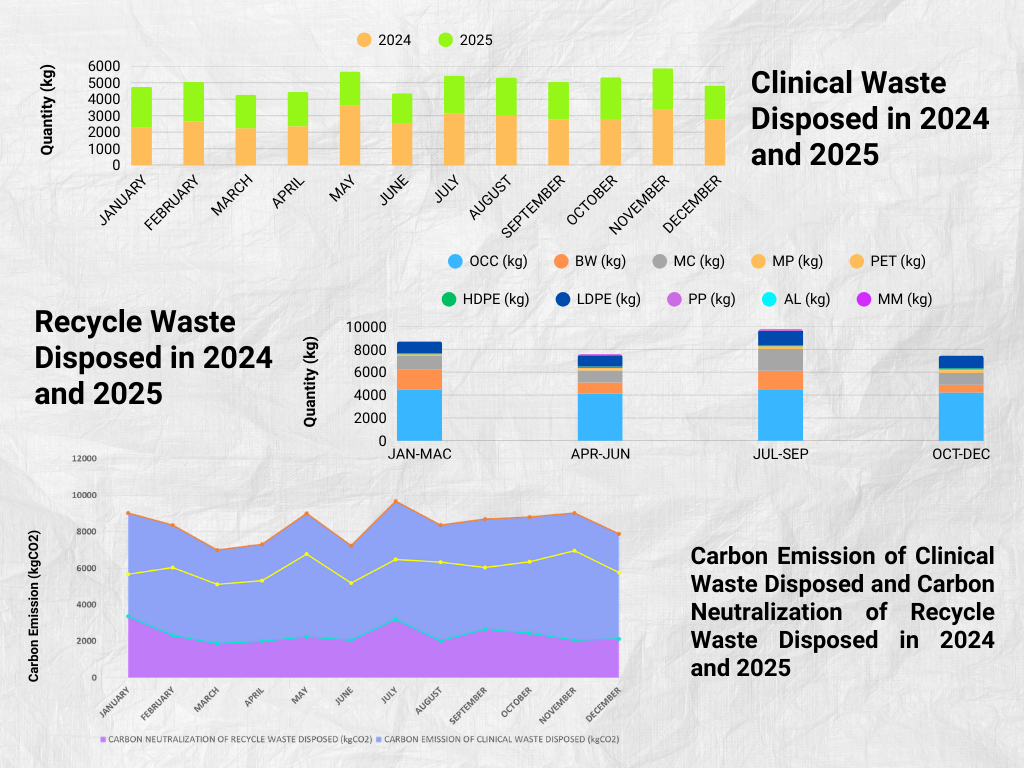
38% Of waste diverted from landfill At minimum, across both years
40,736 kg CO₂ offset in 2024 Up from 35,199 kg in 2023
1m+ Hours worked without injury Zero lost-time incidents in either year
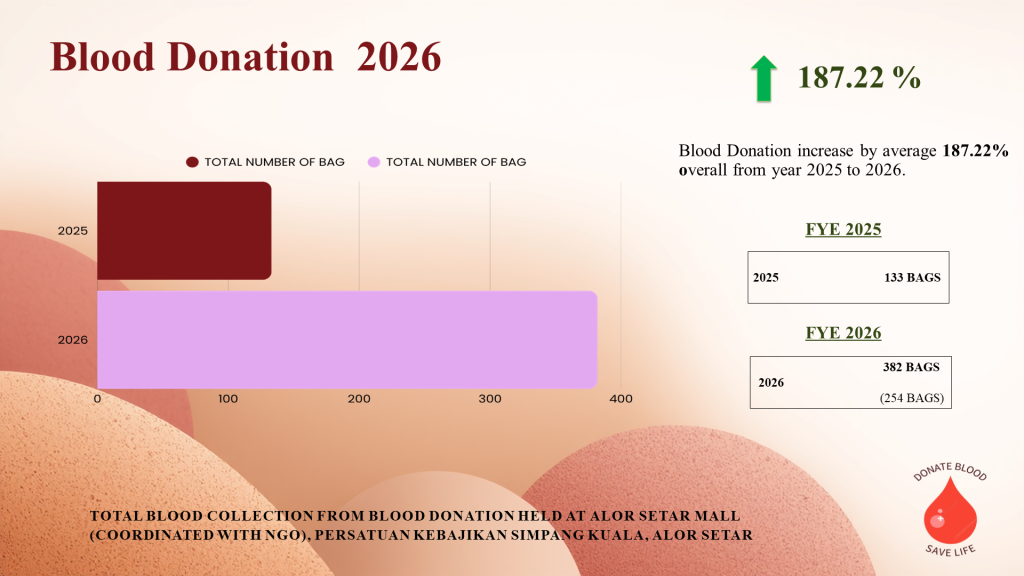
5,689 People screened Through our CSR health screening programme
46% Of our board are women And 80% of our employees
Certification

Two hospitals, two stages

Certification is voluntary, assessed by accredited third parties, and awarded on measured performance rather than intent.

Certified

Two-Star GBI

PMC Alor Setar

Assessed against the Green Building Index and awarded on measured outcomes, not design promises.

  • Energy-efficient systems, water management controls and responsibly sourced materials
  • Benchmarked results in indoor environment quality and resource efficiency
  • On a roadmap toward a higher GBI rating
In progress

Five-Star design & build

PMC Kulim

Designed and built to five-star green standards. The certification that would confirm it is still under way.

  • Built to five-star standards — a measure of design intent, not yet of operation
  • Progressing toward MyCREST, the CIDB's carbon and lifecycle assessment
  • MyCREST quantifies carbon and lifecycle impact, which GBI does not cover

Certification is not permanent — ratings are held by ongoing monitoring, documentation and reassessment every few years. A building can lose one.

Green Building Index (GBI)

Malaysia's first green building rating system, established in 2009. It scores a building on energy and water efficiency, indoor environmental quality, materials, site planning and innovation.

Ratings run from one to six stars, awarded on points achieved.

MyCREST

The Malaysian Carbon Reduction and Environmental Sustainability Tool, developed by the Construction Industry Development Board (CIDB).

It measures carbon and whole-lifecycle impact — the part GBI does not assess.

Where we are putting the effort

Six commitments, and what backs them

Each aligns to a United Nations Sustainable Development Goal. The goal number is theirs, not ours.

UN Goal 7

Affordable and clean energy

Solar generation equivalent to powering 5,600 homes a year.

UN Goal 3

Good health and well-being

5,689 people screened through our CSR programme.

UN Goal 5

Gender equality

46% of our board and 80% of our employees are women. We employ people with disabilities.

UN Goal 12

Responsible consumption

At least 38% of waste diverted from landfill.

UN Goal 16

Peace, justice and strong institutions

More than 85 CCTV cameras across our premises.

Environment, safety & health

No serious non-compliance

Zero lost-time incidents and over a million hours worked without injury, across 2023 and 2024.

Why it matters

What certification actually changes

A smaller footprint

Lower environmental impact, counted toward national and global targets.

Better air to recover in

Indoor air quality and environmental performance patients feel rather than read about.

Lower running costs

Reduced energy and water consumption, year after year.

Something to show

Independent assessment investors, regulators and partners can check for themselves.

How a rating is held

The work between assessments

A certificate is the outcome of five ordinary habits, repeated.

Track

Energy, water, waste and indoor environment, measured continuously.

Compare

Reassessments set our performance against our own past and against peers.

Improve

Upgrades and system tuning are chosen from the data, not from habit.

Innovate

Renewable energy, building management systems and resource optimisation.

Report

Results published, so progress can be checked rather than claimed.

Reporting

The numbers, published in full

Environmental performance indicators and community impact metrics are published on our CSR page, so our sustainability record can be followed year on year rather than taken on trust.