
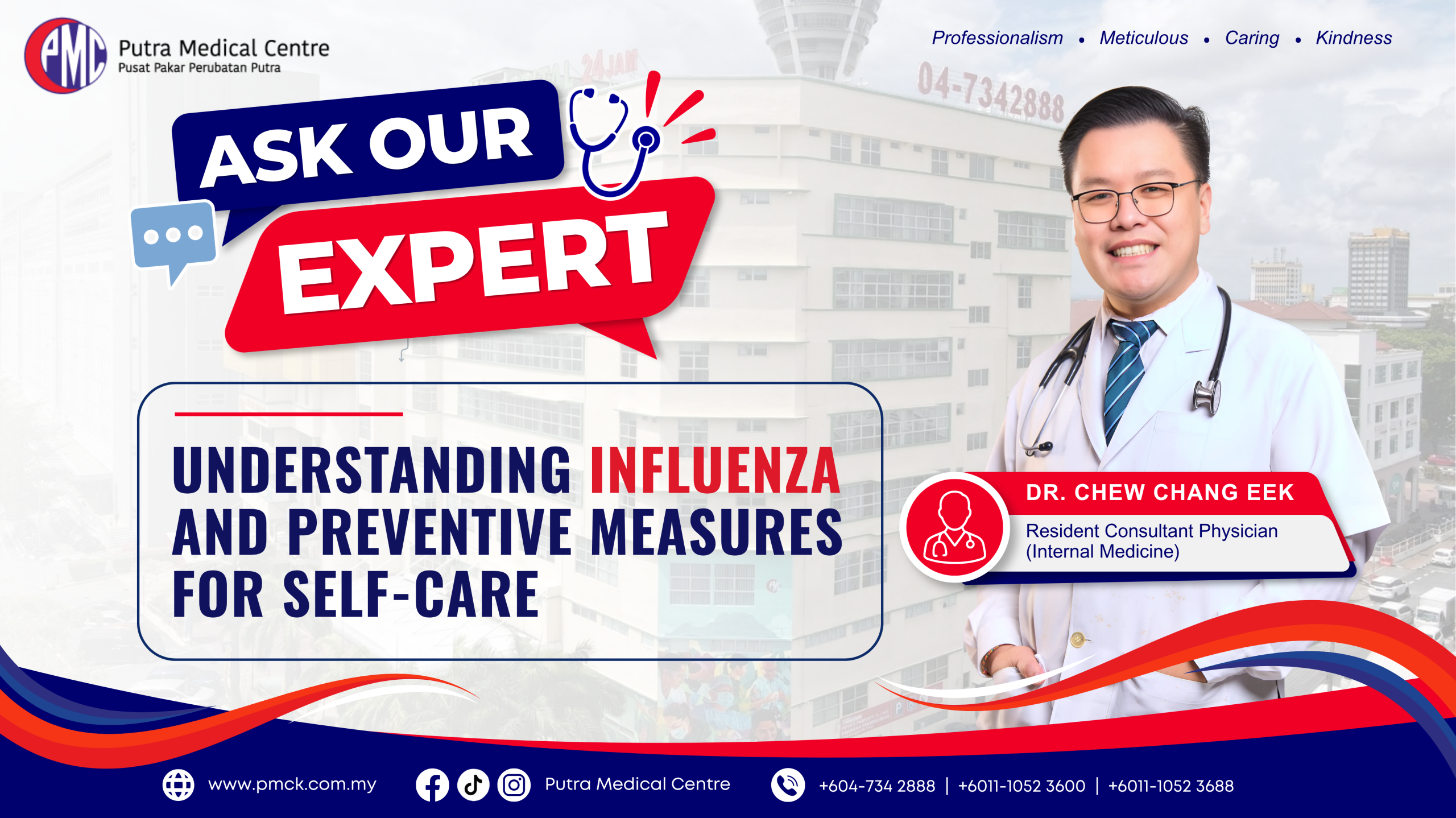
How is it that one of the most known infections which affects millions of all ages worldwide be so frequently treated by medical professionals—and still remain unfamiliar to people in terms of its potential dangers? Let’s begin by unpacking influenza and why we should care. PMC dives in the educative aspects of this sickness for the purpose of driving awareness, with our internal medicine specialist, Dr. Chew Chang Eek, discussing symptoms to watch for and taking preventive measures.
So, what is influenza? More commonly referred to as the flu or the sniffles, it is a highly contagious viral infection of the nose, throat, and lungs—all of which are part of the respiratory system. The respiratory system is the group of organs within the human body that allows us to breathe.

Blocked airways or nasal cavities are no laughing matter. Oxygen deprivation can be unforgiving.
Different Flu Variants
Influenza doesn’t manifest in singular form; there are several types of flu-specific sicknesses which people contract every day. While certain strains hit more readily than their seasonal counterparts, neither one ought to be met with complacency. Remember, blocked airways or nasal cavities are no laughing matter. Oxygen deprivation can be unforgiving—and extremely painful for sufferers.
To avoid a worsening of preventable issues, here’s a critical list of influenza viruses to look out for:
Influenza A: Behind most severe illnesses and occasional pandemics, it is the most common type
Influenza B: This is a seasonal flu that causes more severe symptoms than Influenza C
Influenza C: This is a non-seasonal flu which doesn’t cause severe symptoms
Influenza D: Also called IDV, it mainly affects cattle and spreads via direct contact and aerosol
H1N1: Also known as “swine flu”, this is a subtype of Influenza A

The influenza virus can spread to the hands if a person touches anything that has the virus on it.
Potentially Perilous Contagion
“One can develop either a mild or severe case from exposure to a carrier’s droplets produced from talking, coughing, sneezing, or laughing. These droplets can spread to people and surfaces up to six feet away. The flu virus can spread to your hands if you touch anything that has the virus on it. Transmission can materialise from the simple act of touching an aerosol-compromised doorknob,” explains Dr. Chew Chang Eek, physician and internal medicine specialist at Putra Medical Centre.
Elaborating on the key symptoms to watch for, he shares how influenza affects people differently. Catching the bug can prove a nuisance, but being unwell doesn’t have to be all-consuming for the average sufferer if attended to immediately and responsibly. A good start would be visiting a doctor to determine the severity of a particular bout. Dealing with it without delay is the recommended course of action. If left unchecked, the flu can worsen swiftly.
Telltale Signs of A Flu Infection
Here are some indications as to whether you have the flu, but see a health practitioner to be sure:
- Fever: An infection is known to cause a sudden spike in body temperature
- Chills: Feeling cold to the point of shivering and sweating is not uncommon
- Cough: When the throat is plagued by irritation, severe coughing could occur
- Body aches: Deep fatigue can extend to the body and cause further weakness
- Sore throat: Throat irritation can be a natural progression of excessive coughing
- Runny or stuffy nose: A runny or blocked nose and sneezing are often
- Fatigue: In most cases of the flu, a person can feel deeply tired and drained of energy
- Headaches: When the body is weak with high fever, a headache can hit, with pain levels feeling intense
“Should you encounter any of these symptoms, there is no need to panic. Seek medical attention as soon as possible at the nearest clinic, or head to Putra Medical Centre for a thorough diagnosis. Once examined, your physician will be able to prescribe the right course of medication to address the underlying cause and expedite treatment. Plenty of fluids, rest and Vitamin C are also key,” Dr. Chew suggests.
Those At Risk of Influenza Attacks
While anyone can get the flu given its truly contagious nature, senior citizens 65 and up and young children are even more susceptible. People with conditions such as heart disease or asthma should also be extra careful. Symptoms can be more pronounced across these groups, while exposure to the virus even more dangerous, especially now that the flu season is back and spreading rapidly. Putra Medical Centre is working to ensure the spread is contained with education and awareness.

The most effective way to prevent the flu is to get vaccinated or a flu shot to truly curb its spread.
Preventive Measures and Self-Care
The most effective way to prevent the flu is to get vaccinated or a flu shot. Its spread can also be curbed from simple practices like washing your hands with soap and water for at least 20 seconds, avoiding crowds, and staying home when you are sick. An alcohol-based hand santiser also helps to kill germs. When seeking treatment at a medical facility, wear a face mask and keep the mouth and nose covered (to contain droplets from coughing or sneezing). Avoid touching your face since germs can spread to the hands and get onto surfaces from direct contact. If you are experiencing flu-like symptoms or a fever, do not wait. Contact PMC at +604 734 2888 or come in for a consult.
Vaccination options are now available at Putra Medical Centre (PMC) Alor Setar and are as follows:
Influenza Vaccines:
Vaxigrip and Influvac
Lung Vaccines:
Prevenar 13 (pneumococcal), Vaxneuvance PCV 15 (pneumococcal), and Synflorix (pneumococcal)
Disclaimer: This content is for general educational purposes only and does not replace professional medical advice, diagnosis, or treatment. Always seek advice from a qualified healthcare provider for personal concerns. If you experience urgent symptoms, seek immediate medical attention or call 999.