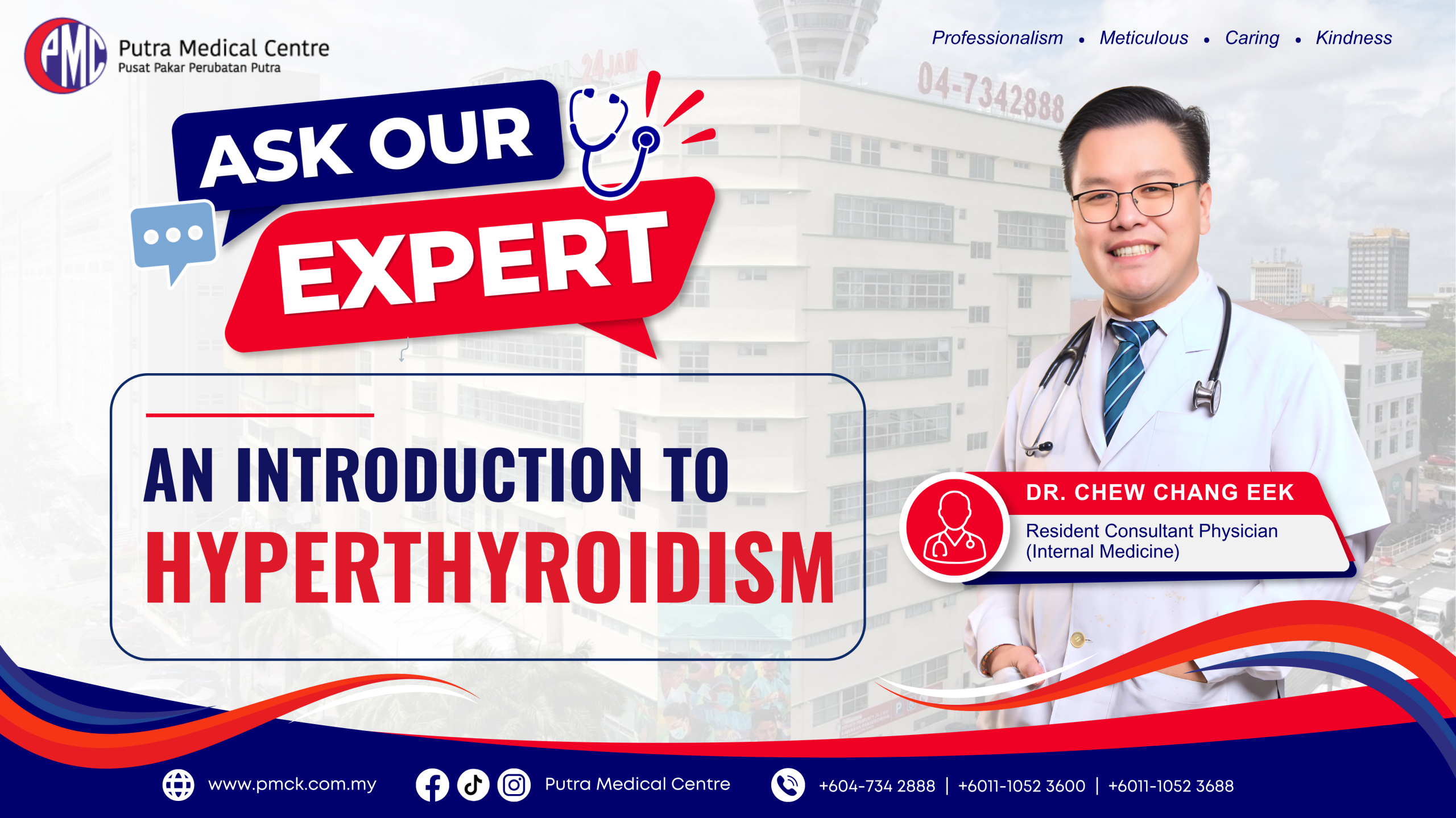
Hyperthyroidism, more commonly known as an overactive thyroid gland in lay-persons’ term refers to a condition where a person’s thyroid gland produces excessive thyroid hormones. It commonly affects women more than men. There are several common causes of hyperthyroidism, for example an overactive thyroid nodule, an autoimmune condition (Grave’s disease) or inflammation of the thyroid gland (thyroiditis).
Other less common causes include side effects of certain medications like amiodarone, pituitary gland tumors and excessive intake of iodine. Yes, contrary to popular belief, taking too much iodine is not a common cause of hyperthyroidism. Food sources that have higher iodine content such as kelp or seaweed are not eaten in large quantities in our population to put a person at risk for hyperthyroidism. Some patients with hyperthyroidism have other family members with similar conditions suggesting a genetic or hereditary linkage.
Symptoms to suggest hyperthyroidism include:
- Increased anxiousness and restlessness
- Irritability
- Bulging and protruding eyes (this may cause visual disturbances and eye irritation)
- Hand tremors
- Arm and leg muscle weakness
- Heat intolerance
- Sweaty palms
- Palpitations
- Shortness of breath
- Leg swelling
- Unusually increased appetite
- Unintentional weight loss
- Increased frequency of bowel movements (may even have frequent diarrhoea)
- An enlarged neck lump (may or may not be painful)
- Irregular menses or abnormally reduced menstrual flow
- Difficulty conceiving
- Bone pains or osteoporosis
However abnormal variants of the above presentation may occur in older patients. For example, a younger patient with hyperthyroidism may have increased appetite and irritability but an older patient with hyperthyroidism may present with lethargy, poor appetite and easily fatigued. If untreated or if control is insufficient, hyperthyroidism may cause the following complications:
- Heart arrhythmias (abnormal heart rhythms most commonly atrial fibrillation) which may lead to heart failure and increased risk of strokes
- Accelerated osteoporosis leading to fragility fractures
- Electrolyte abnormalities especially hypokalemia (can worsen muscle weakness and heart arrhythmias)
- Fertility issues: difficulty conceiving, increased risk of miscarriages
Therefore it is important to consult an Internal Medicine Physician or an Endocrinologist if a person has any of the symptoms above or if there are concerns about his or her thyroid status especially if there is a strong family history of thyroid disease. The attending doctor will take a detailed personal history including any relevant family history. The doctor will then perform a physical examination to identify signs of hyperthyroidism and also presence of any palpable neck swelling.
Contrary to popular belief, a person can suffer from hyperthyroidism without having a visible or palpable neck swelling. This can be explained by presence of subclinical nodules which can be detected by a simple neck ultrasound. Thus, the next step in management is to arrange for a blood test to identify the thyroid hormone levels and an ultrasound of the neck to assess the thyroid gland. Other tests that the attending doctor may order (case to case basis) include assessing for anemia, electrolyte abnormalities (especially hypokalemia), liver function test, an electrocardiogram (ECG) or a Chest Xray. If there is suspicion of an autoimmune condition, blood tests can be sent to identify autoantibodies that may be triggering the condition.
Treatment of hyperthyroidism involve medications that a patient can take to suppress thyroid hormone production. Other treatments will be targeted at managing complications associated with hyperthyroidism e.g. potassium replacement for hypokalemia, bone strengthening supplements for osteoporosis as well as heart rhythm and heart failure treatments for patient who have developed arrhythmias and heart failure.
Disclaimer: This content is for general educational purposes only and does not replace professional medical advice, diagnosis, or treatment. Always seek advice from a qualified healthcare provider for personal concerns. If you experience urgent symptoms, seek immediate medical attention or call 999.