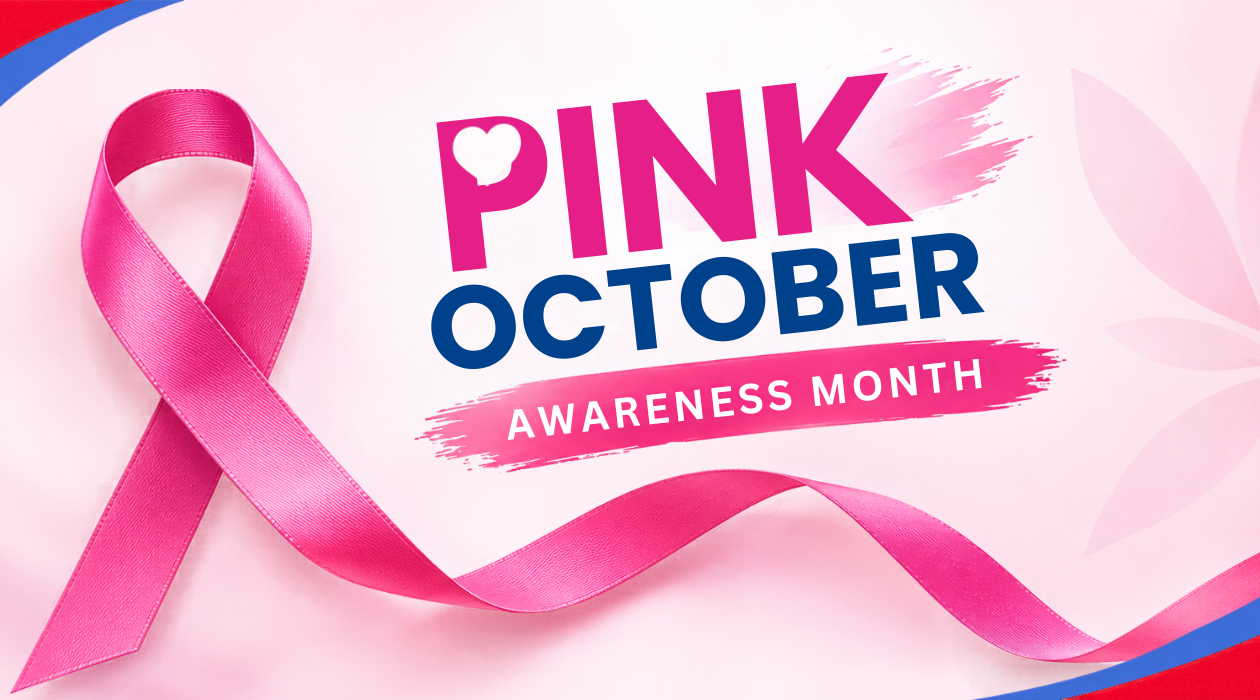
October is Pink October, a month dedicated to raising awareness about breast cancer and encouraging women to take an active role in their breast health.
Breast cancer remains one of the most common cancers affecting women. While some risk factors cannot be changed, being aware of changes in your breasts and seeking medical advice when something feels different can make an important difference.
What Is Breast Cancer?
Breast cancer occurs when abnormal cells in the breast grow uncontrollably and may form a tumour.
It can affect women of different ages and not every breast change means cancer. However, new or unusual changes should not be ignored.
What Signs Should Women Look Out For?
Possible signs and symptoms of breast cancer may include:
- A new lump or thickening in the breast or underarm
- A change in the size or shape of the breast
- Changes in the skin, such as dimpling or unusual thickening
- Changes in the nipple, including unusual inversion
- Nipple discharge, particularly if it occurs without squeezing
- Persistent pain or discomfort in a specific area
- Changes that are noticeably different from your usual breast appearance
Not all breast lumps or changes are cancerous. However, it is important to have new or unusual changes assessed by a healthcare professional.
Who May Have a Higher Risk?
The risk of breast cancer can increase with certain factors, including:
- Increasing age
- A family history of breast cancer
- Certain inherited genetic changes
- Previous breast conditions
- Certain hormonal or reproductive factors
- Being overweight or physically inactive
Having a risk factor does not mean that a person will develop breast cancer, while women without obvious risk factors can also develop the disease.
Why Is Early Detection Important?
Breast cancer may be easier to treat when detected at an earlier stage.
Being familiar with your breasts can help you notice changes, while appropriate breast screening can help detect abnormalities that may not yet cause symptoms.
Depending on your age, personal risk factors and medical history, your doctor may recommend appropriate breast assessment or screening, such as mammography or other imaging examinations.
Take Action for Your Breast Health
Pink October is more than wearing pink. It is a reminder to:
Know your body.
Be familiar with how your breasts normally look and feel.
Do not ignore changes.
Seek medical advice if you notice a new or unusual change.
Understand your risk.
Discuss your personal and family history with your doctor.
Follow appropriate screening recommendations.
Your doctor can advise on the most suitable screening approach based on your age and individual risk.
If you have noticed a change in your breast or would like to understand your breast health and screening options, get a consultation with our healthcare professionals for appropriate assessment and advice.
Putra Medical Centre is committed to supporting women and their families through professional healthcare, early assessment and appropriate medical guidance.