
Skip to content

Nutrition Week: Small Changes, Better Health

Nutrition Week is a good reminder that the food we eat plays an important role in our health, energy and overall wellbeing.

A healthy diet does not mean giving up your favourite foods. It means making balanced choices and practising moderation.

What Does Healthy Eating Look Like?

Try to include a variety of foods in your daily meals:

  • Fruits and vegetables for vitamins, minerals and fibre
  • Whole grains and complex carbohydrates for energy
  • Protein such as fish, eggs, lean meat and legumes
  • Milk, dairy or suitable alternatives for nutrients such as calcium
  • Plain water as your main drink

At the same time, limit foods and drinks that are high in added sugar, sodium and saturated fat.

Small Changes Can Make a Difference

You do not need to change your entire diet overnight. Start with simple habits:

Choose plain water more often instead of sugary drinks. Bring your own tumbler to keep yourself hydrated.

Add more fiber, at least 3 serving of vegetables and 1-2 serving of fruits to your 3 main meals.

Limit gravy intake up to 2 tablespoons per meal.

Reduce ultra-processed foods and choose fresh or minimally processed options more often.

Pay attention to portion sizes, use quarter, quarter half plate/Malaysia healthy plate and avoid eating more than your body needs.

Nutrition at Every Stage of Life

Good nutrition is important for everyone. Children need nutritious food for growth and development, adults need it to support daily health, while older adults need adequate nutrition to maintain strength and wellbeing.

If you have specific dietary needs or health concerns, speak with a doctor or qualified dietitian or nutritionist for personalised advice.

This Nutrition Week, Start with One Small Change

Healthy eating is not about being perfect. It is about making better choices consistently.

Eat well. Live well. Start today.

Putra Medical Centre is committed to supporting you and your family towards better health through informed and healthy lifestyle choices.

Disclaimer: This content is for general educational purposes only and does not replace professional medical advice, diagnosis, or treatment. Always seek advice from a qualified healthcare provider for personal concerns. If you experience urgent symptoms, seek immediate medical attention or call 999.

Loading

Continue Reading

More from our healthcare experts.

View all
November, 2026

World Radiography Day 2026

World Radiography Day is observed annually on 8 November to commemorate the discovery of X-rays by German physicist Wilhelm Conrad Röntgen on 8 November 1895. This discovery marked a significant milestone in medical science, enabling healthcare professionals to examine internal structures of the human body without the need for exploratory surgery. Today, medical imaging is […]

Read More
October, 2026

Pink October Awareness Month

October is Pink October, a month dedicated to raising awareness about breast cancer and encouraging women to take an active role in their breast health. Breast cancer remains one of the most common cancers affecting women. While some risk factors cannot be changed, being aware of changes in your breasts and seeking medical advice when […]

Read More
October, 2026

Mental Health Matters: Recognizing When You Need Support

Mental health is an important part of our overall wellbeing. Just like physical health, our emotional and psychological wellbeing can change throughout different stages of life. Stress from work, school, relationships, financial concerns or major life changes can sometimes affect how we feel and function. While occasional stress is a normal part of life, persistent […]

Read More
October, 2026

Rabies – What Should You Do After An Animal Bite?

A bite or scratch from an animal may seem like a minor injury but in areas where rabies is a concern, it should never be taken lightly. Rabies is a viral disease that affects the central nervous system. Once clinical symptoms appear, it could lead to fatality. However, rabies is preventable when appropriate treatment is […]

Read More
September, 2026

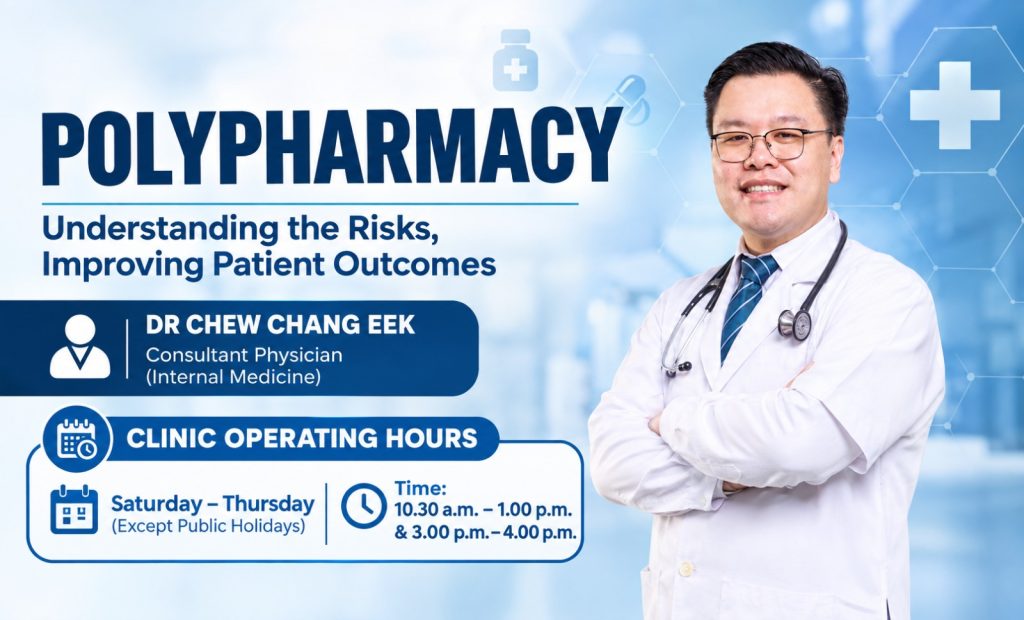
Polypharmacy: Understanding the Risks of Taking Multiple Medication

Polypharmacy refers to the regular use of five or more medications and is particularly common among older adults with multiple chronic health conditions. While multiple medications may be necessary, taking several medicines can increase the risk of medication-related problems, including drug interactions, side effects and difficulties with adherence. Regular medication reviews can help ensure that treatments remain safe.

Read More
September, 2026

School Holidays and Screen Time: Keeping Children Healthy and Active

School holidays are a great opportunity for children to rest, play and spend quality time with family. However, with more free time, children may also spend longer periods on smartphones, tablets, television and video games. Learn how parents can encourage a healthy balance between screen time, physical activity, sleep, family interaction and other activities to support their child’s overall health and wellbeing.

Read More