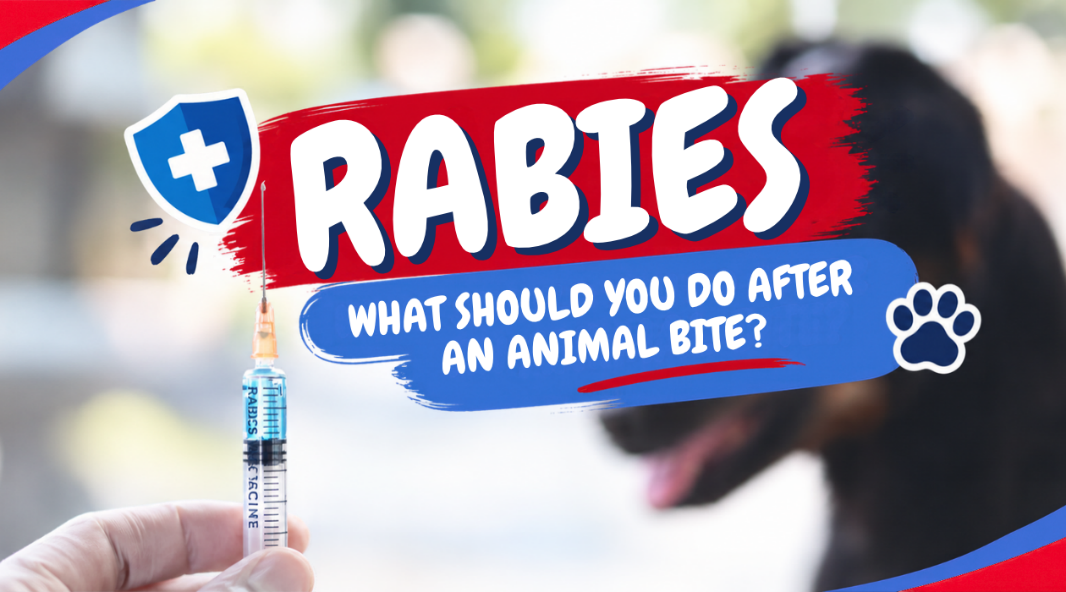
A bite or scratch from an animal may seem like a minor injury but in areas where rabies is a concern, it should never be taken lightly.
Rabies is a viral disease that affects the central nervous system. Once clinical symptoms appear, it could lead to fatality. However, rabies is preventable when appropriate treatment is given promptly after exposure.
How Is Rabies Spread?
Rabies is usually transmitted through the saliva of an infected animal, most commonly through a bite. Scratches or saliva coming into contact with broken skin or mucous membranes can also result in exposure.
Dogs, bats, monkeys and other wild animals are responsible for the vast majority of human rabies infections worldwide. Children are also particularly vulnerable to animal bites.
What Should You Do After an Animal Bite or Scratch?
If you are bitten or scratched by a potentially rabid animal:
1. Wash the Wound Immediately
Wash and flush the wound thoroughly with soap and running water for at least 15 minutes.
If available, an appropriate antiseptic such as povidone-iodine may be applied after thorough washing.
2. Seek Medical Attention Promptly
Do not wait for symptoms to appear.
A healthcare professional will assess the type of exposure and determine whether rabies post-exposure prophylaxis (PEP) is required. PEP may include rabies vaccination and for certain higher-risk exposures, rabies immunoglobulin (RIG).
3. Do Not Rely on the Animal Appearing Healthy
A potentially exposed person should seek medical assessment promptly. If the animal can be safely identified and monitored by the appropriate authorities or veterinary professionals, provide this information to the healthcare team.
When Is Rabies Vaccination Needed?
The need for PEP depends on the type of exposure.
For example, minor scratches or abrasions without bleeding may require vaccination, while deeper bites or scratches, saliva contact with broken skin or mucous membranes, and certain bat exposures may require both vaccination and rabies immunoglobulin.
A healthcare professional should make the final assessment based on the exposure and relevant local guidance.
What Are the Symptoms of Rabies?
Early symptoms may be non-specific and can include fever, headache and weakness. As the infection progresses, neurological symptoms may develop.
Once clinical symptoms appear, rabies is almost invariably fatal. This is why preventive treatment after a potential exposure should not be delayed while waiting for symptoms to develop.
How Can Rabies Be Prevented?
Prevention starts with responsible interaction with animals:
- Avoid approaching or handling unfamiliar animals.
- Teach children not to disturb animals while they are eating, sleeping or caring for their young.
- Avoid contact with stray or wild animals.
- Ensure pets receive appropriate vaccination.
- Seek medical attention promptly after a bite or scratch from a potentially infected animal.
Remember: Act Early
A small bite or scratch can have serious consequences if the risk of rabies is overlooked.
If you or your child has been bitten or scratched by an animal, wash the wound immediately for at least 15 minutes and seek medical attention promptly for a proper assessment.
Do not wait for symptoms to appear. Early post-exposure treatment can prevent rabies from developing.
Putra Medical Centre is committed to providing timely medical care and guidance for you and your family.
If you have experienced an animal bite or scratch and are concerned about possible rabies exposure, seek medical attention as soon as possible.
Disclaimer: This content is for general educational purposes only and does not replace professional medical advice, diagnosis, or treatment. Always seek advice from a qualified healthcare provider for personal concerns. If you experience urgent symptoms, seek immediate medical attention or call 999.