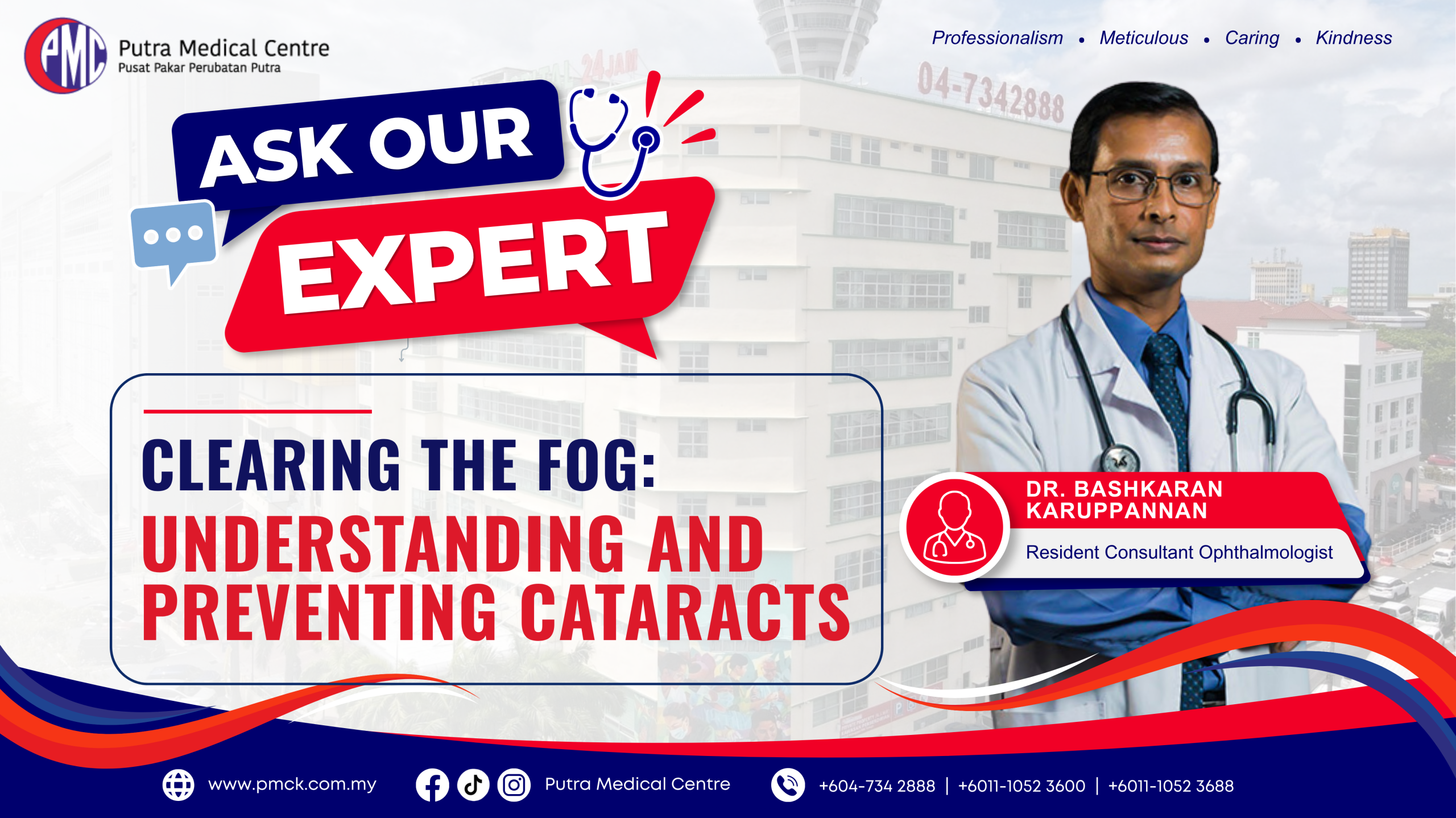
Dr. Bashkaran Karuppannan discusses cataracts with the aim to educate viewers on cataract development, symptoms, treatment options, and preventive measures.
Cataracts, characterised by the clouding of the eye’s natural lens, remain a leading cause of vision impairment globally. While often associated with aging, cataracts can significantly affect daily activities, diminishing the quality of life. However, advancements in medical technology have revolutionised cataract treatment, offering patients safer and more effective surgical options. In this edition of “Ask Our Expert”, we delve into the intricacies of cataracts with Dr. Bashkaran Karuppannan, Resident Consultant Ophthalmologist at Putra Medical Centre (PMC).
ABOUT DR. BASHKARAN KARUPPANNAN
Dr. Bashkaran Karuppannan is a Resident Consultant Ophthalmologist at Putra Medical Centre in Alor Setar, Kedah. He earned his Bachelor of Medicine and Bachelor of Surgery from Thanjavur Medical College, Tamil Nadu, India, and his Master of Medicine in Ophthalmology from Universiti Sains Malaysia, Kubang Kerian, Kelantan. Dr. Bashkaran’s expertise encompasses cataract surgeries, pterygium excision, and the management of diabetic retinopathies. He is also a member of the Malaysian Society of Ophthalmology.
Q&A WITH DR. BASHKARAN KARUPPANNAN
1. What exactly is a cataract, and how does it affect vision?
A cataract is the clouding of the eye’s natural lens, leading to blurred or dim vision. This cloudiness occurs due to the clumping of proteins within the lens, obstructing light from passing clearly through to the retina. Patients often experience difficulties with reading, recognizing faces, and driving, especially at night.
2. Are cataracts solely an age-related condition?
While aging is the most common cause, cataracts can also result from factors such as diabetes, prolonged exposure to ultraviolet light, smoking, certain medications like corticosteroids and eye injuries. Genetic predisposition can also play a role.
3. What are the latest advancements in cataract surgery?
Recent innovations include femtosecond laser-assisted cataract surgery, which allows for more precise incisions and lens fragmentation, leading to faster recovery times and improved visual outcomes. Additionally, the development of advanced intraocular lenses (IOLs), such as multifocal and accommodating lenses, enables correction of presbyopia and astigmatism, reducing dependence on glasses post-surgery.
4. How does laser-assisted cataract surgery differ from traditional methods?
Laser-assisted surgery utilises a computerised high-resolution scanning system to customise the procedure to the eye’s unique characteristics, replacing the manual use of blades. This technology enhances precision, predictability, and safety compared to traditional cataract surgery.
5. What is the role of intraocular lenses (IOLs) in cataract surgery?
During cataract surgery, the clouded natural lens is replaced with an IOL. Advanced IOLs can correct other vision problems, such as myopia, hyperopia, and astigmatism, potentially reducing the need for glasses after surgery.
6. How has the integration of 3D visualisation systems impacted cataract surgeries?
The integration of 3D visualisation systems into cataract surgery has enhanced the surgeon’s ability to perform precise, delicate manoeuvres. These high-definition, stereoscopic viewing systems provide a detailed view of the eye’s anatomy, improving surgical accuracy and potentially reducing the risk of complications.
7. What should patients expect during the recovery period after cataract surgery?
Patients typically experience improved vision within 24 to 48 hours post-surgery, although full recovery may take a few weeks. Modern advancements have led to shorter recovery times and better outcomes, allowing patients to resume normal activities sooner.
8. Are there any non-surgical treatments effective in preventing or slowing the progression of cataracts?
Currently, no non-surgical treatments have been proven to prevent or reverse cataracts. However, wearing UV-protective eyewear, maintaining a healthy diet rich in antioxidants, and managing underlying health conditions like diabetes can help slow their progression.
9. How do advancements in cataract surgery benefit patients with other eye conditions?
Innovations such as optical coherence tomography (OCT) imaging provide detailed cross-sectional images of the eye, aiding in preoperative planning and intraoperative guidance. This ensures precise surgical interventions, benefiting patients with coexisting ocular conditions.
10. What advice would you give to individuals hesitant about undergoing cataract surgery?
Cataract surgery is one of the safest and most effective procedures, with a high success rate. Delaying surgery can lead to further vision deterioration, impacting quality of life. Consulting with an experienced ophthalmologist can help address concerns and provide personalised information about the benefits and risks.
Dr. Bashkaran emphasises that staying informed about cataracts and the available surgical options is crucial. Regular eye examinations and timely intervention can significantly enhance visual outcomes and overall quality of life.
Disclaimer: This content is for general educational purposes only and does not replace professional medical advice, diagnosis, or treatment. Always seek advice from a qualified healthcare provider for personal concerns. If you experience urgent symptoms, seek immediate medical attention or call 999.