In Malaysia today, diabetes and hypertension continue to be among the most commonly reported long-term health conditions. Recent findings from the National Health and Morbidity Survey (NHMS) 2023 highlight that millions of Malaysian adults are living with either or both conditions, reflecting a steady rise over the past decade.
What is equally important is that a significant number of individuals remain undiagnosed. Because both diabetes and high blood pressure can develop gradually without clear early symptoms, many people only discover their condition during routine screenings or when complications begin to appear.
High blood pressure or hypertension is also called a “silent killer” as it can cause damage to our bodies without our knowledge. Health authorities have also observed that these two conditions frequently occur together. This overlap is not uncommon, as they share similar risk factors such as lifestyle patterns, dietary habits, and ageing. When present at the same time, they may increase the risk of long-term complications involving the heart, kidneys, eyes, and blood vessels.
Across Malaysia, there is growing awareness around the importance of early detection, regular monitoring, and long-term follow-up. Public health efforts continue to emphasise the role of everyday habits, community awareness, and accessible healthcare services in supporting individuals living with chronic conditions.
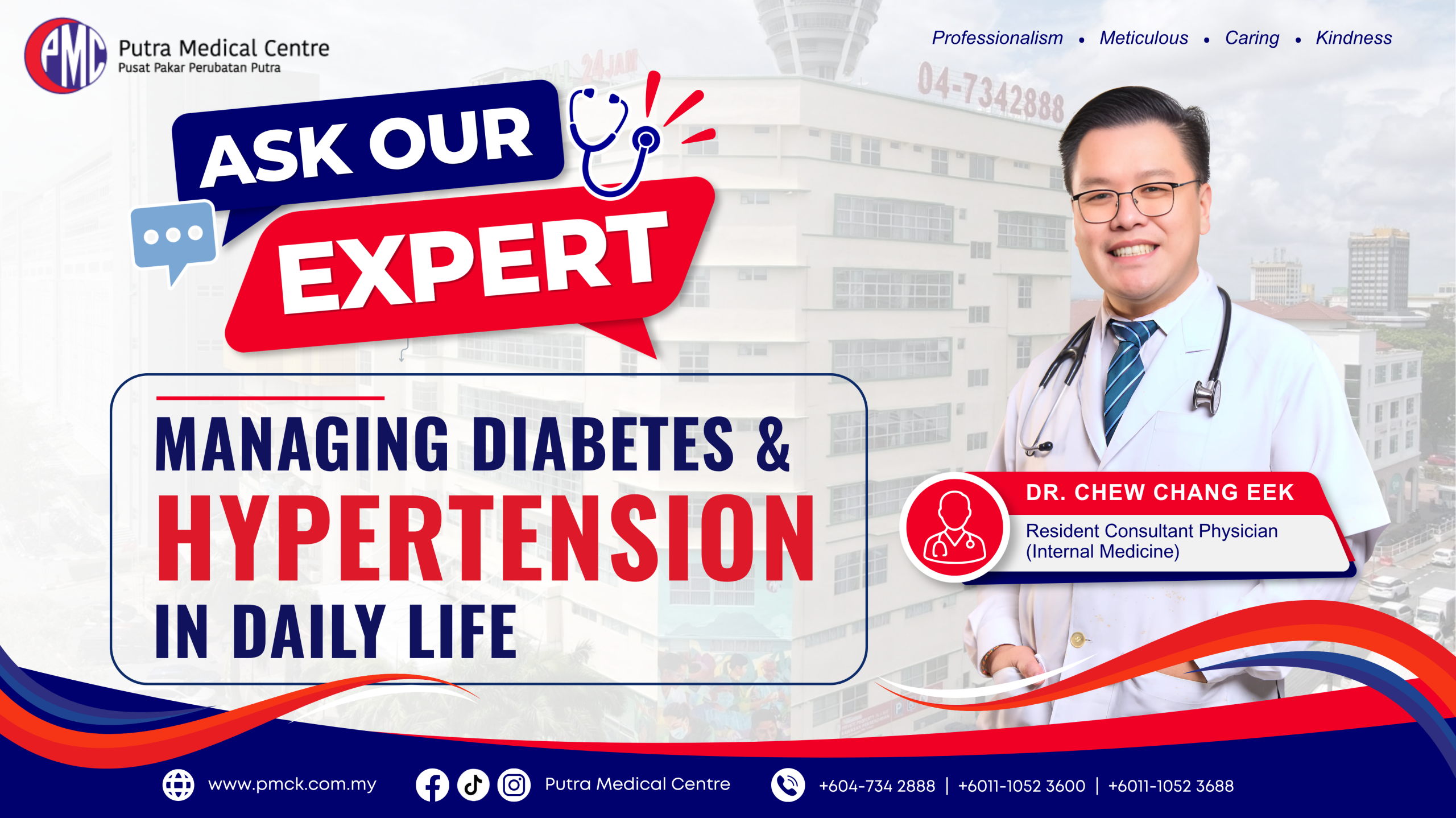
In this edition, Dr. Chew Chang Eek, a resident consultant internal medicine physician at Putra Medical Centre (PMC), shares general insights on how diabetes and hypertension are commonly understood and managed in daily life.
Meet Our Expert
Dr. Chew Chang Eek is a resident consultant physician in internal medicine at Putra Medical Centre (PMC). His clinical focus includes diabetes mellitus, hypertension, endocrine conditions, and lifestyle-related health concerns. He regularly manages patients with long-term conditions and supports them through monitoring, education, and follow-up care tailored to their individual needs.
Q1: Why are diabetes and hypertension so common in Malaysia?
Dr. Chew explains that both conditions are increasingly seen due to a combination of factors such as ageing, urban lifestyles, dietary patterns, and reduced physical activity.
“Many people may not realise they have these conditions early on because symptoms can be subtle or absent. This is why regular health screening plays an important role in early detection,” he shares.
People who are from at-risk groups, e.g., those who are overweight, those who smoke or consume alcohol heavily, and those with family histories of diabetes and hypertension, should get themselves screened regularly.
Q2: Can diabetes and hypertension happen together?
“Yes, it is quite common,” says Dr. Chew.
Both conditions can be linked through shared risk factors such as weight, diet, and lifestyle habits. When they occur together, they may increase the strain on organs such as the heart, kidneys, eyes, brain, and liver.
This makes regular follow-up and monitoring an important part of long-term care.
Q3: What daily habits can support better long-term health?
According to Dr. Chew, simple and consistent habits can make a meaningful difference over time.
He highlights a few commonly recommended practices:
- Choosing balanced meals consisting of foods from a variety of food groups
- Staying physically active based on individual ability
- Getting sufficient rest and maintaining regular sleep patterns
- Managing daily stress through simple relaxation techniques
- Avoidance of cigarette smoking and vape inhalation, while limiting alcohol consumption
“These are general health practices. Each person should discuss what is suitable for them with a healthcare professional,” he adds.
Q4: When is medication needed?
Dr. Chew explains that not everyone will have the same care plan.
“For some individuals, medication may be part of managing diabetes or hypertension. The decision depends on the individual’s condition, overall health, and clinical assessment.”
He emphasises that patients are usually guided on how their treatment works and are reviewed regularly to ensure it remains appropriate.
Q5: Why is regular monitoring important?
“Monitoring helps us understand how the condition is changing over time,” Dr. Chew says.
Checking blood pressure or blood glucose levels, along with attending follow-up appointments, allows healthcare providers to assess progress and make adjustments when needed.
“It also gives patients the opportunity to ask questions and stay informed about their health.”
PMC: Supporting Long-Term Chronic Care
Putra Medical Centre (PMC) supports individuals and families in Alor Setar, Kedah, and across northern Malaysia with general medical care, health screening, and follow-up services for long-term conditions.
Through coordinated care and regular review, PMC aims to help patients better understand and manage their health over time.
Why It Matters
Diabetes and hypertension are long-term conditions that many Malaysians live with today. While each person’s experience is different, understanding the conditions, maintaining follow-up, and adopting suitable daily habits can support overall well-being.
Disclaimer: This content is for general educational purposes only and does not replace professional medical advice, diagnosis, or treatment. Always seek advice from a qualified healthcare provider for personal concerns. If you experience urgent symptoms, seek immediate medical attention or call 999.