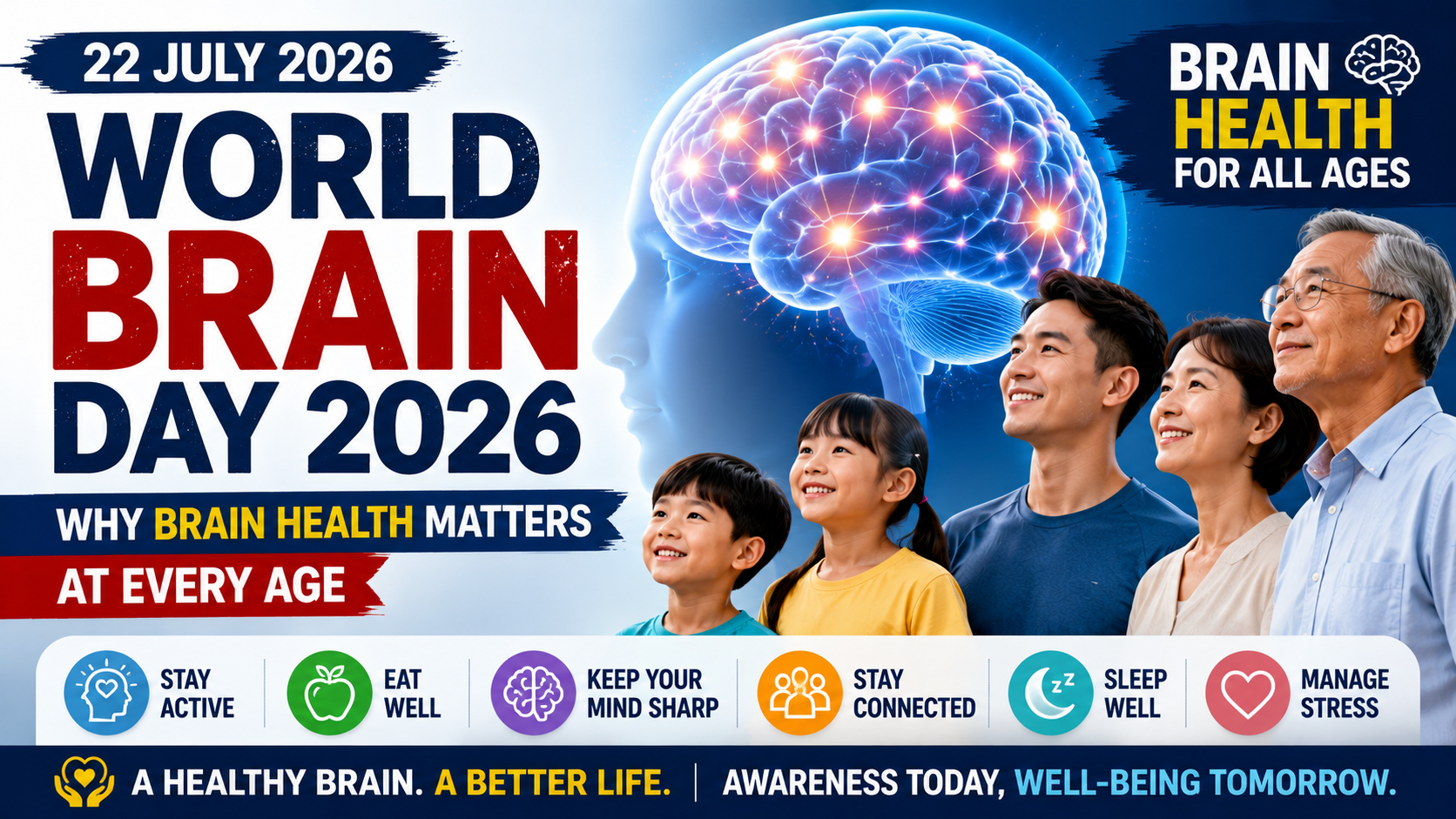
Every year on 22 July, World Brain Day highlights the importance of protecting and promoting brain health. Led by the World Federation of Neurology, this global awareness campaign encourages people to learn more about the brain and the conditions that can affect it throughout life.
The 2026 theme, “Brain Health for All Ages,” reminds us that caring for our brains is important from childhood through older adulthood. While our brains change as we age, healthy habits and greater awareness can help support overall well-being at every stage of life.
Understanding Brain Health
Brain health refers to how well the brain functions across different areas, including memory, learning, movement, emotions, and decision-making. A healthy brain supports daily activities, relationships, work, and quality of life.
Many conditions can affect brain health, including:
Stroke
Stroke occurs when blood flow to part of the brain is interrupted or reduced. It can affect movement, speech, memory, and other important functions.
Epilepsy
Epilepsy is a neurological condition that causes recurring seizures due to abnormal electrical activity in the brain.
Dementia
Dementia is a term used to describe a group of symptoms that affect memory, thinking, and the ability to perform everyday activities.
Why World Brain Day Matters
World Brain Day was established to increase public understanding of neurological conditions and encourage greater awareness of brain health worldwide.
The campaign serves as an opportunity to:
-
- Promote public education about brain health
- Encourage healthy lifestyle habits
- Support research and innovation in neurological care
- Reduce stigma surrounding neurological conditions
- Advocate for equitable access to neurological healthcare
As population’s age and neurological conditions become more common globally, awareness and education play an increasingly important role in supporting communities.
Brain Health Throughout Life
While no single action can guarantee lifelong brain health, several everyday habits are associated with overall physical and cognitive well-being.
Stay Physically Active
Regular physical activity supports overall health and may contribute to healthy brain function by improving blood circulation and supporting cardiovascular health.
Choose a Balanced Diet
A diet rich in fruits, vegetables, whole grains, legumes, and lean protein sources can help support overall wellness.
Keep the Mind Engaged
Activities such as reading, learning new skills, solving puzzles, or engaging in social interactions may help keep the mind active and stimulated.
Prioritise Sleep
Quality sleep plays an important role in learning, memory, and overall well-being.
Manage Health Conditions
Regular health check-ups can help individuals better understand and manage conditions that may affect long-term health.
Recognising Changes in Brain Health
Changes in memory, communication, behaviour, balance, or thinking abilities can occur for various reasons. Individuals who are concerned about these changes may consider discussing them with a qualified healthcare professional. Early assessment and appropriate support may help individuals and families better understand their health needs and available care options.
Brain Health Awareness in Malaysia
Across Malaysia, healthcare organisations, professional societies, and community groups continue to support public education on neurological health. Awareness campaigns such as World Brain Day provide opportunities for individuals and families to learn more about brain health and encourage conversations about healthy ageing, prevention, and support for those living with neurological conditions.
PMC: Supporting Lifelong Health Awareness
Putra Medical Centre (PMC) supports community health education initiatives that encourage healthy living and informed healthcare decisions. Through preventive health programmes and public awareness efforts, PMC aims to help individuals and families across Kedah and northern Malaysia make informed choices about their long-term well-being.
A Shared Responsibility
World Brain Day reminds us that brain health is not only a medical issue but a lifelong journey that affects people of all ages. By staying informed, adopting healthy lifestyle habits, and supporting greater awareness, communities can contribute to a future where brain health is valued and protected throughout life.
Disclaimer: This content is for general educational purposes only and does not replace professional medical advice, diagnosis, or treatment. Always seek advice from a qualified healthcare provider for personal concerns. If you experience urgent symptoms, seek immediate medical attention or call 999.